
In the early months of the administration of Joe Biden, The Offence argued that the president – with the assistance of a Democrat-controlled United States (US) Congress – was marching toward historic midterm losses by prioritizing progressive policies without a public mandate,[1] dividing and unravelling a nation in the process.[2]
In essence, American Progressivism is on trial, and tomorrow the verdict will be in.
Analysts and pundits have been describing this election in terms of a wave, whether there will be one and the extent of its size.[3] But not only is the party in power typically subject to losses,[4] the decisions and the tone established have been accelerating the pattern without any apparent regard for consequences to the electorate. Certainly, Democrats’ partisan governing have been reinforcing the likelihood of a critical backlash. Without broad support, they have spent trillions with an emphasis on the climate[5] and equity.[6]
Aided by that decision to push forward with divisive policies and drifting with the tides of history rather than struggling against them, Republicans are positioned to achieve one of their greatest House majorities in decades.[7] Despite the temporary blip that occurred with the Supreme Court decision in Dobbs v. Jackson Women’s Health Organization, energizing Democrats and women,[8] stemming enthusiasm for Republicans, as evident in the generic Congressional vote,[9] little has changed respecting the overall tone and temperature in the country, wherein Americans largely believe their country is on the wrong track.[10] Curiously, though successful in passing sweeping legislation, Democrats have focused their campaigns on protecting women’s rights to an abortion – albeit left largely undefined by individual candidates – and the capitol riot on January 6, which they deem a prime example of the threat to democracy,[11] a more esoteric concept – also left largely undefined, except to proclaim that certain elements on the right are to blame.
The polls suggest that these two (2) issues have rated rather high amongst registered Democrats, but not high for the general electorate.[12] Meanwhile, Republicans have spent the election cycle focusing more on the issues that cut across party lines and affect all voters.
Inflation. Crime. The border.
Their message…everything is out of control.
It appears to have worked…not just because of consistent talking points and conservative outlets’ focus on them, but because the Democrats have largely ceded the issues to Republicans by sidestepping and ignoring them. Clearly, many voters feel their bank accounts, safety and country are under assault. Not all concerns can be attributed to Congress; however, the leftward lean of the current government – through policy or rhetoric – have their fingerprints all over them. Although understandable since actions they have (or have not) taken can be traced back as causes to the concern, the problem their candidates have is these are the top issues voters will be considering when casting their ballots this year, particularly inflation (or the economy) and crime.[13] And by sidestepping or ignoring the voters’ concerns, they may have been sidestepping or ignoring the voters.
These same voters may be responding to them loud and clear tomorrow by largely sidestepping their candidates. Should that occur, will Democrats hear them?
A Maslow Election and the Political Realignment
The social contract upon which western civilization is based grants governments the responsibility to provide a safe, productive society for its citizens.[14] When that society becomes less safe, the public begins to feel things are going in the wrong direction and the meaning of borders is diminished, government has failed its most fundamental responsibilities to those citizens. That is where many Americans feel they are today.[15]
What began in 2016, a populist-style movement – most notably with Donald Trump’s Make America Great Again (MAGA) Republican presidential campaign, though broader in the body politic in that it captured the Democratic Party as well with the unexpected success of Senator Bernie Sanders[16] – has continued apace, past what may be a ripple that was the 2020 covid times election.
In 2022, despite the excruciating minutia of micropolitics that have been spread across the daily news for the past two (2) years with efforts to find cause and effect in all details, it is the macropolitics – larger-scale issues – that dominate these days. So are the tides of time and history. Wave elections are often characterized by critical issues carrying the day, finding a natural home in a specific political party and energizing its base, but they can quickly come to a head, crashing upon the political shores, the waters receding. They are transient, impermanent.
It is when underlying concerns cut so deep that they begin to transcend typical political affiliations resulting in a repudiation of another party altogether, that a country is experiencing a sea change, a political realignment with repercussions that extend beyond the issues of the day, changing the direction of politics at large, moving a people – a nation – in a new direction.
Observers are bearing witness to history in what may be well-described as a Maslow-style election, one brought on by neglect to uphold that social contract. Established by American psychologist Abraham Maslow, the concept of Maslow’s hierarchy of needs hypothesizes that a human’s most fundamental needs must be met before proceeding toward others, then desires, and ultimately, self-actualization, but that each must be built upon the preceding step.[17]
Consider the issues pushed by the competing parties in this election cycle and compare to the hierarchy. Democrats have focused on abortion and democracy. Republicans have focused on the more everyday effects of inflation and crime. A valid argument can be made that abortion is a matter of safety – health – but it is a divisive issue that elicits, not just strong support, but equally strong emotional opposition. And democracy may be fundamental to a free society, but it is not so tangible. Inflation and crime, on the other hand, are more relatable, more easily experienced by a broader swath of society.
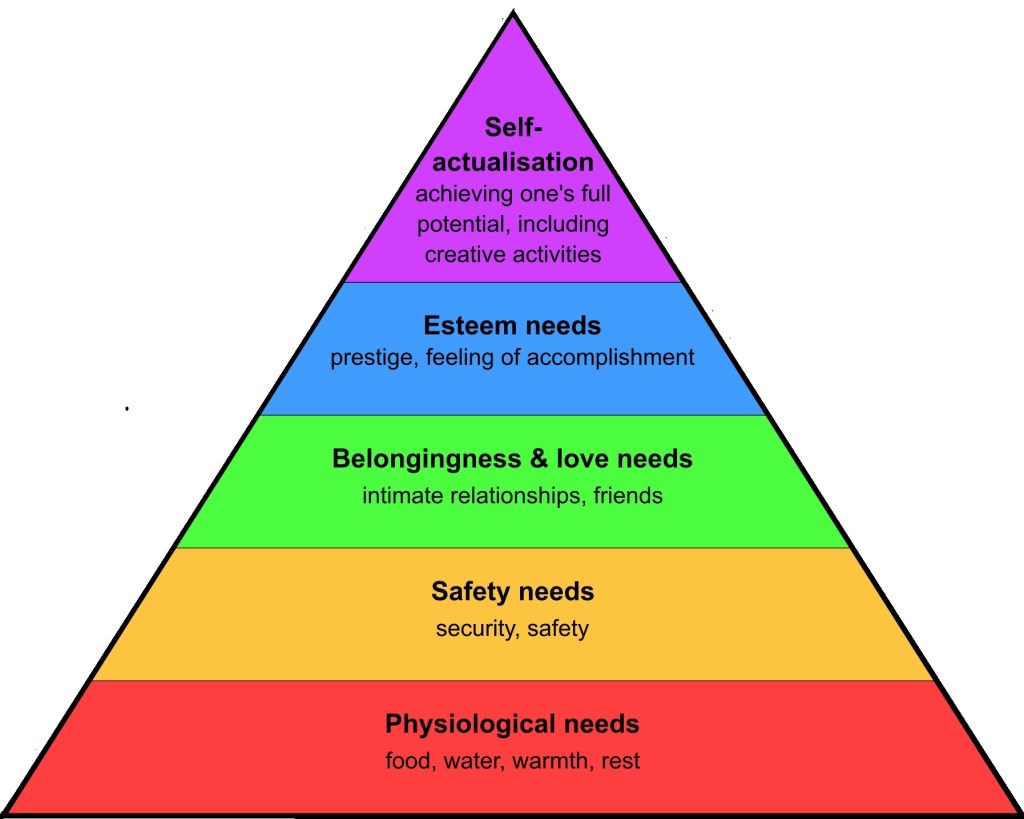
Were it not for the insecurity that exists in the US today when it comes to basic safety – even physiological needs, as evidenced by the unprecedented shortage of baby formula[18] and the threats to heating in New England[19] – voters would be generally content, able to move on to the next. But with 40-year high inflation,[20] rising crime[21] and record illegal activity at the southern border,[22] it is hard to argue ‘we are ready to move beyond the first stages.’ Democrats have made the false assumption that these stages have been met, that they are unchangeable, and prioritized micropolitical issues like equity, transgender rights[23] and other feelings of esteem and self-worth.
But voters are struggling and insecure about both their personal situations and their country, and Republicans are the ones arguing for their basic survival – the macropolitical – fighting for general financial and physical security for all.
Barring the Democrats’ sudden identification and ownership of the causes of the midterm’s top issues – those threatening basic needs – a political realignment will be swift and more permanent. The longer they dismiss the concerns and deflect responsibility, the more likely they will alienate the public, expanding their losses into future elections. If they are to remain a party with national appeal rather than a coastal party, they will need to treat Washington, D.C. more like the capitol of the United States rather than the capitol of California or New York, states in which they have a supermajority in the legislatures and can proceed with the most liberal policies without much opposition. Failure to approach national governance differently could bring them into national irrelevancy for a generation.
Given the behavior seen over the past several years, there is little evidence the Democratic Party will drift closer to the political middle, to reorient its priorities around the general electorate rather than the progressive priorities of cities and coastal states; however, an example may be found in Oklahoma, irrespective of tomorrow’s results. Though more complicated with incumbent Republican governor Kevin Stitt under fire for several scandals, in the deep red state, a moderate Democrat – the former Republican, Joy Hofmeister – is in a competitive race.[24]
Americans increasingly believe their country is headed in the wrong direction,[25] and with Democrats in control of both the legislative and executive branches, it is currently governed at the national level as a single-party state. This does not bode well for Democrats, who have argued that Republicans are to blame for the problems. It will prove difficult to convince voters that the party in power is not to blame, that it is the other party that has caused the problems, particularly when the major initiatives have passed without much – if any – Republican support.[26]
On the Issues, All Politics Remain Local
Washington, through the current Democratic leadership, has made its impacts felt throughout America, cutting across demographics. And were the political shift not real, there would not be broad movements toward the Republican Party, evidenced by trends showing critical demographics are swinging toward the GOP, from Hispanics[27] to suburban white women,[28] groups Democrats relied on as recently as 2020 with traditional support of the former and gains with the latter.[29]
Though an isolated incident, in what may portend the future, the special election for Texas Congressional District 34, which has amongst the larger percentage of Hispanics in the nation, resulted in its first Republican representative, Mayra Flores.[30] As the adage goes, ‘all politics are local.’ There, the top issue was the southern border with Mexico, which would be a more natural concern given its location on the border. But with Biden’s overall handling of the border, broadly opening it up to mass migration and the trafficking of deadly narcotics like fentanyl,[31] the administration has, essentially, turned all districts (and states) into border districts and states. An issue that should be local to border communities, is now ‘local’ across the country.
And though crime rates vary across the country, there is a general upward spike, one that has not abated with the end of pandemic policies, and one that coincides with the passage of more lenient criminal justice reform policies like the end of cash bail.[32] Such concerns over safety have increased to the degree that the deep blue state of New York has, for this cycle, a competitive governor’s race.[33] If Lee Zeldin is elected, he will be its first Republican governor since George Pataki, who was similarly elected to office under rising crime rates in 1994,[34] the same year the Republican Revolution regained Congress[35] in another broad repudiation of Democrat policies or dismissal of public concerns.
Whether it be found in Governor Kathy Hochul’s question as to why Zeldin finds crime so important,[36] or that only 33% of white Democrats are concerned about crime compared to 80% amongst black Democrats[37] – a core constituency of their party – there is a trend wherein those disconnected from the effects of their policies have less concern for the consequences than those that have to live with them.
So, aided by the proliferation of video, conservative outlets have been able to focus on these issues by highlighting the more despicable cases and broadcasting visceral images for all to see, bringing events outside one’s community home. In a way, national issues have become local. And whether supported by local data or not, voters are feeling the disruptions.
As for the economy, record levels of inflation have followed record levels of spending (compared to the pre-pandemic period),[38] and irrespective of the details as to cause, the timing matches, and Americans are feeling that too. The gains in wage growth have been more than wiped out by inflation, yet they do not seem to feel the benefits of the trillions in spending. To many, Washington simply raised prices on them.
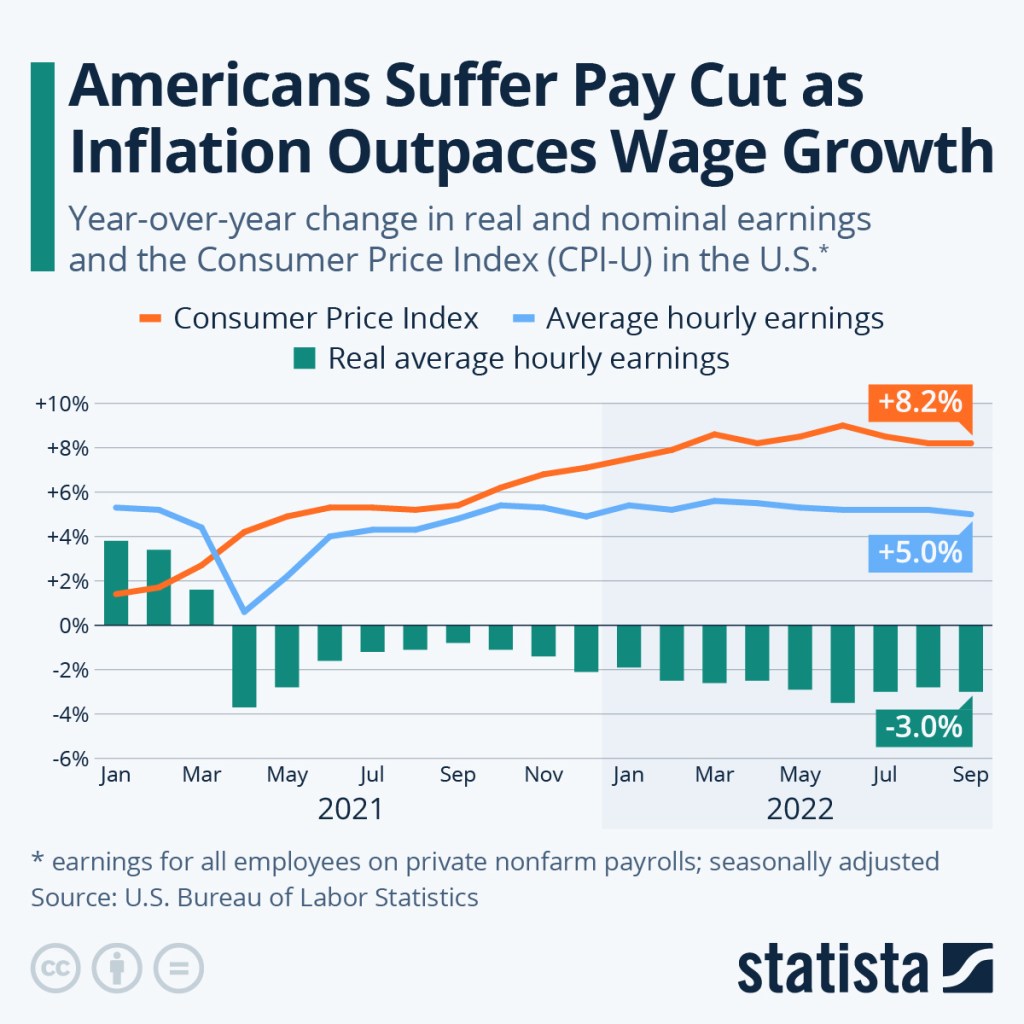
Inflation (and the economy) rate as the top concern among votes. And whether technically a recession or not, the public feels the economy is not improving,[39] blaming the president[40] as he devotes his time to other issues. In its simplest, neither the president, nor his party, have focused enough on what matters most to the public, doing little to improve their credibility amongst voters. Even the cynically named Inflation Reduction Act provided little in the way of actual inflation reduction.[41] It was, rather, the combination of a small-scale Green New Deal[42] and social programs[43] totaling another $740B in spending,[44] again, the priorities of progressives, not Americans at large.
Democrat, Republican, the more politicians tune out the voters, the more voters will tune out the politicians.
Who is listening now?
[1] Editor, Are Democrats Paving the Road for the Return of Trump and a New Republican Era? (The Offence, 2021)
[2] Editor, Pulling on a Thread: Unravelling the Republic, (The Offence, 2021)
[3] Steven Shepard, A ripple, a wave or a tsunami? Here’s what to watch on election night, (Politico, 2022)
[4] Geoffrey Skelley and Nathaniel Rakich, Why The President’s Party Almost Always Has A Bad Midterm, (FiveThirtyEight, 2021)
[5] Ari Natter, Here’s What’s in Democrats’ $370 Billion Climate Spending Deal, (Bloomberg, 2022)
[6] The Biden Plan to Build Back Better by Advancing Racial Equity Across the American Economy, (JoeBiden.com, 2021)
[7] Harry Enten, Republicans hold a near-historic lead on a key midterm indicator, (CNN, 2022)
[8] Amelia Thompson-DeVeaux and Meredith Conroy, Women Have Swung Toward Democrats Since The Dobbs Decision, (FiveThirtyEight, 2022)
[9] 2022 Generic Congressional Vote, (RealClearPolitics, 2022)
[10] Direction of Country, (RealClearPolitics, 2022)
[11] Stephen Collinson, Democrats confront their nightmare scenario on election eve as economic concerns overshadow abortion and democracy worries, (CNN, 2022)
[12] Ariel Edwards-Levy, Polling shows that most voters say economic concerns are top of mind, (CNN, 2022)
[13] Gary Langer, Economic discontent fuels GOP hopes as midterms draw to a close: POLL, (ABC News, 2022)
[14] The social contract in Rousseau, (Britannica)
[15] Jenny Goldsberry, Majority reports feeling less safe during Biden presidency: Poll, (Washington Examiner, 2022)
[16] Nicole Gaudiano, Bernie Sanders defied expectations with long-shot presidential campaign, (USA Today, 2016)
[17] Saul McLeod, Maslow’s Hierarchy of Needs, (Simply Psychology, 2022)
[18] Meredith Lee Hill, Biden officials admit there’s still a problem getting baby formula to shelves, (Politico, 2022)
[19] Scott Disavino and Laura Sanicola, Frigid winter? New Englanders will pay through frozen noses for oil and gas, (Reuters, 2022)
[20] Reade Pickert, Core US Inflation Rises to 40-Year High, Securing Big Fed Hike, (Bloomberg, 2022)
[21] Russell Contreras, Survey: Homicides down midyear as overall violent crime jumps, (Axios, 2022)
[22] Nick Miroff, U.S. border arrests rose to record high in May, data shows, (The Washington Post, 2022)
[23] Zach Schonfeld, Democrats unveiling ‘Transgender Bill of Rights’, (The Hill, 2022)
[24] Eric Cortellessa, Why the Oklahoma Governor’s Race Is Closer Than Anybody Expected, (Time, 2022)
[25] Satisfaction With the United States, (Gallup, 2022)
[26] Does Your Member Of Congress Vote With Or Against Biden? (FiveThirtyEight, 2022)
[27] Aaron Zitner and Bryan Mena, Latino Voters, Once Solidly Democratic, Split Along Economic Lines, (Wall Street Journal, 2022)
[28] Catherine Lucey, White Suburban Women Swing Toward Backing Republicans for Congress, (Wall Street Journal, 2022)
[29] Ruth Igielnik, Soctt Keeter and Hannah Hartig, Behind Biden’s 2020 Victory, (Pew Research Center, 2020)
[30] Victoria Bekiempis, Mayra Flores wins special election to turn Texas seat Republican, (The Guardian, 2022)
[31] Andrew Dorn, Another record month for fentanyl seizures at border, (NewsNation, 2022)
[32] Mathew Continetti, The Policies Responsible for the Coming Democratic Disaster, (National Review, 2022)
[33] Andrew Mark Miller, New York governor race between Gov. Hochul and Rep. Zeldin tightens to ‘toss up’, (Fox News, 2022)
[34] Juan Manuel Benitez, Republicans hope Zeldin will emulate Pataki’s 1994 victory, (Spectrum News, 2022)
[35] The Republican Revolution, (History)
[36] Brandon Gillespie, Lee Zeldin, Gov. Kathy Hochul duke it out over crime in fiery debate amid surge in New York violence, (Fox News, 2022)
[37] John Gramlich, Violent crime is a key midterm voting issue, but what does the data say? (Pew Research Center, 2022)
[38] Federal Budget Receipts and Outlays: Coolidge – Biden, (UC Santa Barbara, 2022)
[39] Frank Newport, U.S. Public Opinion and the Election: the Economy, (Gallup, 2022)
[40] Darragh Roche, Joe Biden to Blame for High Levels of Inflation, Majority of Americans Say, (Newsweek, 2022)
[41] Christopher Rugaber and Josh Boak, Inflation Reduction Act may have little impact on inflation, (AP News, 2022)
[42] Bella Isaacs-Thomas, What the Inflation Reduction Act does for green energy, (PBS, 2022)
[43] Kelly Anne Smith, The Inflation Reduction Act Is Now Law – Here’s What It Means For You, (Forbes, 2022)
[44] Shawna Chen, Biden signs Democrats’ $740 billion tax, climate and health care bill into law, (Axios, 2022)
 The Offence