For four years, the world bore witness to an increasingly combative relationship between the American press and President Donald Trump.[1] By any reasonable measure, the emotionalism expressed by reporters and the resulting negative news stories that surrounded the administration surpassed those of recent administrations.[2] Irrespective of one’s opinion on the former President – his behavior or policies – and whether or not it was justified, a substantial volume of negative news inundated society.
Meanwhile, during the 2020 campaign, the approach to the two presidential candidates, Trump and Joe Biden, provided a stark contrast – a night and day approach – with the latter, unlike his counterpart, rarely challenged by reporters.[3] And with the departure of Trump and the inauguration of Biden, we continue to see the contrast with Trump derided as a “disgraced,”[4] “small man”[5] replaced by the “better angel,” praised for his “compassion.”[6] And the first White House press briefing, with the introduction, soft handling and coverage of the new secretary, Jen Psaki,[7] in no way resembled that provided to Trump’s fist secretary, Sean Spicer.[8]
Why is this? In its simplest, the American press, or media, consists of its own people, and Americans are a divided people with strong opinions.[9] Reporters, journalists and newsroom chiefs are these people and they possess their own set of morals, ethics, beliefs, etc. It would not be unnatural for individuals to allow these predispositions to affect their activity. In some respect, everybody does this. When it comes to public trust and truth; however, the crux of the credibility problem is that citizens seek an independent media to bring them facts[10] so that, afterward, they can apply their own predispositions to the news of the day. Unfortunately, modern journalists often take it upon themselves to shortcut this paradigm by applying their preferences to the stories, and through use of techniques such as information, selection and confirmation bias,[11] frame stories in terms that fit their politics without disrupting their larger narratives. This used to be reserved to pundits and the op-eds, where one would seek it, but this mentality has spilled over into the newsrooms, blurring the line between news and opinion, a precarious, if not irresponsible, development.
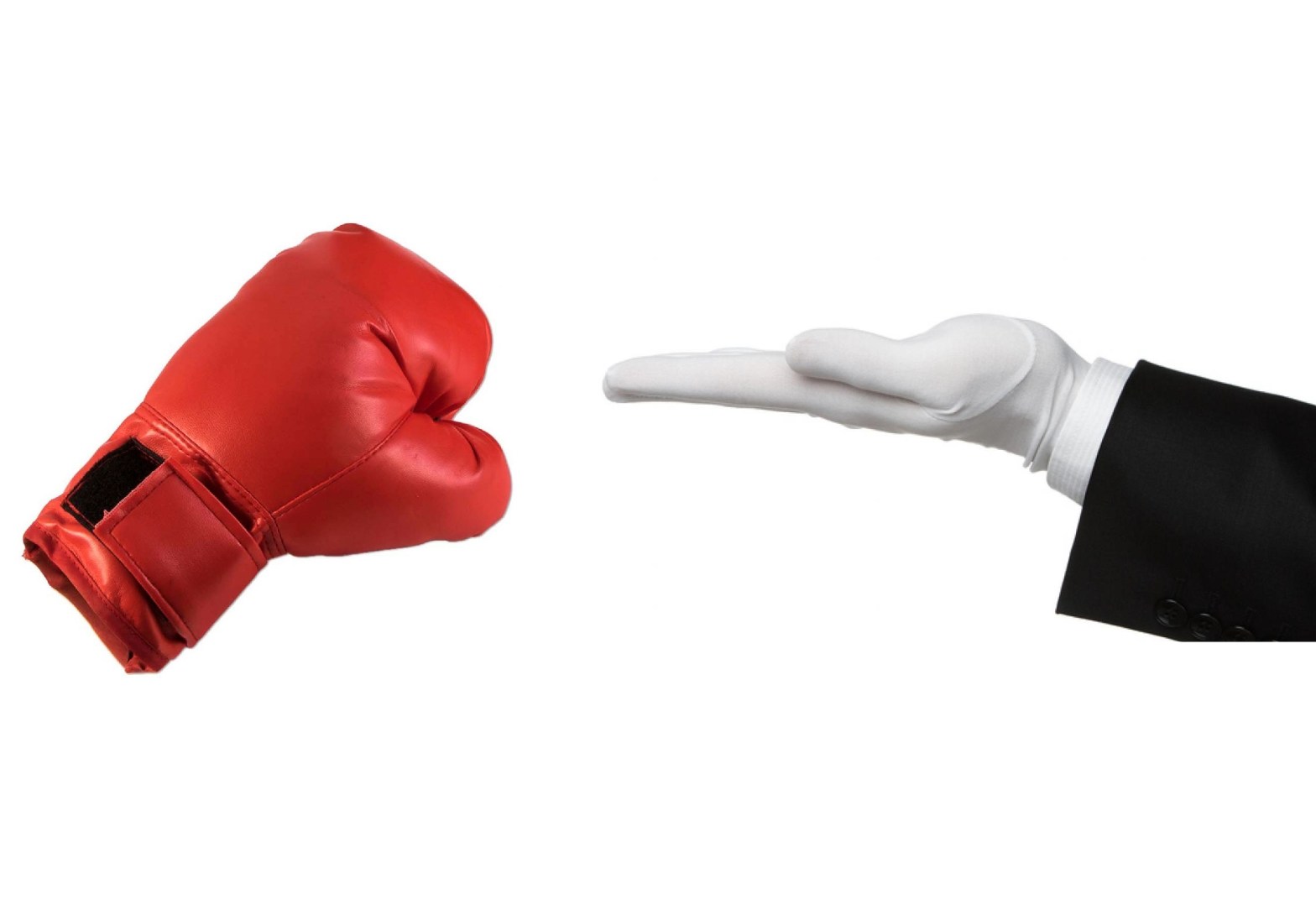
Consequently, the behavior of reporters largely differs depending upon who they are addressing or reporting about. And in an era in which people increasingly define matters as black and white, or us against them, those with whom they disagree, on principle, become enemy combatants that need to be taken down. As respects the coverage of the former president, some have referred to this mentality as Trump Derangement Syndrome (TDS),[12] the idea that whatever the opponent says or does must, by definition, be wrong, and therefore contradicted. And the higher the stakes, the greater the threat, the more hostile the environment. Thus, when confronting such opposition, the media will strap on their boxing gloves.
But for those with whom they are allied, who are positioned to advocate on their behalf – better yet, enforce their agenda – they are to serve as protectors, to be handled with white gloves. One should not, after all, harm the powers that be when those powers serve one’s interests. And before the coming of Trump, party affiliation amongst journalists already weighed substantially in favor of Democrats at a rate of nearly four to one over Republicans.[13]

Covering Candidacies Is a Challenge
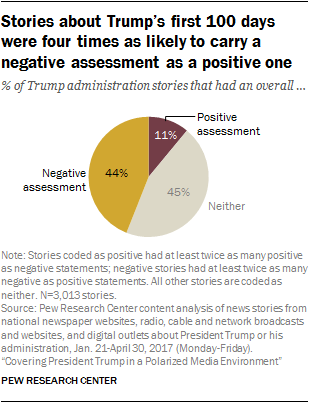
From the day that Trump descended on his golden escalator, he was treated by many in the press as a joke, his candidacy was mocked.[14] For this professional class, up until the day he was elected to the Presidency, little did they realize the joke was on them, that the people did not simply agree with their analysis of the election,[15] despite the relentlessly negative coverage he received.[16] But rather than the introspection that would benefit those who were so wrong about something they thought they were so right about, namely the obviously imminent election of Hillary Clinton, they began to search for blame, and immediately increased their ire against Trumpism, as demonstrated through visible hostility from those such as CNN’s White House correspondent, Jake Acosta, who never hid his disdain for the administration, often making himself the news story.[17] This served as but an example of those who set the stage for four years of media attacks, what would appear to many to be little more than the public arm of the anti-Trump Resistance that developed in the immediate aftermath of Trump’s election. According to Pew Research, “stories about Trump’s first 100 days were four times as likely to carry a negative assessment as a positive one.”[18]
And four years later, how did the press act during the 2020 presidential campaign? Following the pattern of the 2008 general election, wherein Barrack Obama and Joe Biden were measurably covered more favorably than John McCain and Sarah Palin,[19] day after day, reporters failed to push Joe Biden on tough questions. Instead, they waited for whatever little opportunity Biden’s handlers would permit courtesy of the “list.” What were these lists he kept searching for before proceeding to ask questions? A genuinely accessible candidate, one open to any inquiry, would simply point his/her finger and allow a journalist to pose an unknown question. A list is only required if, at best, you have vetted the questioners or, at worse, vetted the questions.
By contrast, whether from the podium, the ‘chopper talks,’[20] or the numerous interviews, Americans witnessed the ease of this approach on a near-daily basis as Trump made himself one of the most accessible Presidents in modern times. This approach was neither complicated, nor new. The only reason to retain a list is if handlers have determined their candidate is unprepared for questions and/or they have predetermined who will ask, or what will be asked. The soft questions that resulted seemed to be consistent with this interpretation. The press’ failure to ask Biden tough follow up questions to inconvenient stories bordered on journalistic malfeasance[21] during a time – a crisis – in which the people were being asked to determine the leader of a nation.
One could accuse Trump of turning to more friendly outlets like Fox News, but few would consider an hour-long sit down with a seasoned newsman like Chris Wallace a puff piece,[22] and Trump also sat down with others, such as Axios,[23] and consistently answered questions coming at him from both the left and right.
Where was Joe Biden, and can a man who largely hid his way to the Presidency be trusted to lead with transparency? Should this not be of concern to the press?
Trump is not without blame for the tone of his Presidency. It began with his campaign, which included a barrage of accusations against the media, ultimately declaring the media as the “enemy of the people.”[24] In the days of fake news, exacerbated by the quick and often poorly-sourced – if not outright fictitious – stories, his condemnation of the news was well-received by many, particularly conservatives who have long-complained about liberal bias in the mainstream media. And the former president’s personality, one prone to aggressive and accusatory language, helped pour fuel on the fire.
Was this the media’s fault or Trump’s fault?
Citizens should expect their leaders to deliver the truth, but they are also aware that elected officials are politicians, that there are some inherent biases, irrespective of their best intentions. And so the public may be right to hold a certain degree of distrust there. But the public had long relied on reporters to report the facts, to leave their own biases behind them when delivering the day’s events. With the increasingly evident lack of impartiality on full display, they do the public no service when it comes to restoring trust in the media and public institutions. This failure is evident in the polls, which show a precipitous decline in the public’s trust in the media, which they largely believe to be pushing their own agenda rather than promoting facts.[25] Public distrust will follow when the media industry is dominated by members whose actions seem to echo the words of former Attorney General, Eric Holder, “when they go low, we kick them. That’s what this new Democratic Party is about.”[26] Average people expect more from the press.
Treating public officials differently depending on their political parties does nothing to restore this eroding trust. The (D) following a public official’s name should not prove itself a shield to criticism any more than the (R) should serve as a target. Will journalists and reporters continue to handle sources differently depending on whether they love the person or love to hate the person?
Instead of bridging the divides, the press has been losing more and more credibility with its increasingly obvious bias, not just against Trump, which has been clear since 2016, but in favor of Biden, who it has preferred to the Republican alternative since 2008. The exacerbation of this, in combination with feasting on conflict, will only reinforce the ‘fake news media’ label that has gained traction with the exposure of its bias. In irony, for many, the press had its cloak of impartiality blatantly ripped away courtesy of its greatest foe.
It is common to hear that the press is there to hold public officials accountable. Few would doubt this is an appropriate course to pursue, but when will the press be held accountable?
Americans may have to face a sad reality – that the people they had trusted to bring them the truth may care neither for what they think of them, nor what they expect of them.
Until such day, as always, one would do well to remember…
The news is the news because they said so.
[1] Trump Isn’t The 1st President To Have Had A Tense Relationship With The Media, (NPR, 2020)
[2][2] Jeff Cox, Trump press coverage ‘sets new standard’ for negativity: Study, (CNBC, 2017)
[3] Jeffrey M. McCall, Press acts toothless watchdogs at Biden pressers, (The Hill, 2020)
[4] Stephen Collinson, Trump’s historic 2nd impeachment trial hangs over Biden and Republicans, (CNN, 2021)
[5] Brian Flood, CNN anchors can’t hide excitement as Trump exits White House: ‘He just looks like a small man,’ (Fox News, 2021)
[6] David Rutz and Brian Flood, Media fawns over Biden throughout Inauguration Day: ‘Boy, did they lay it on thick,’ (Fox News, 2021)
[7] Jeremy Stahl, Jen Psaki Is Praised for “Not Crazy” First Press Conference, (Slate, 2021)
[8] Ryan Brooks, The First White House Press Briefing Of The Biden Presidency Was Extremely Mild, (BuzzFeed, 2021)
[9] Charlotte Alter, How President Biden Handles a Divided America Will Define His Legacy, (Time, 2021)
[10] Amy Mitchell, Katie Simmons, Katerina Eva Matsa and Laura Silver, Publics Globally Want Unbiased News Coverage, but Are Divided on Whether Their News Media Deliver, (Pew Research Center, 2018)
[11] Giovanni Luca Ciampaglia and Filippo Menczer, These are the three types of bias that explain all the fake news, pseudoscience, and other junk in your News Feed, (NiemanLab, 2018)
[12] Rob Whitley, Is “Trump Derangement Syndrome” a Real Mental Condition? (Psychology Today, 2019)
[13] Chris Cillizza, Just 7 percent of journalists are Republicans. That’s far fewer than even a decade ago, (The Washington Post, 2014)
[14] Regina G. Lawrence and Amber E. Boydstun, The Trump Conundrum, (Columbia Journalism Review, 2017)
[15] John Cassidy, Media Culpa? The Press and the Election Result, (The New Yorker, 2016)
[16] Hadas Gold, Study: 91 percent of coverage on evening newscasts was negative to Donald Trump, (Politico, 2016)
[17] Lindsey Ellefson, CNN’s Jim Acosta Grills Kayleigh McEnany on Her ‘Disinformation,’ (The Wrap, 2017)
[18] Amy Mitchell, Jeffrey Gottfried, Galen Stocking, Katerina Eva Matsa and Elizabeth Grieco, Covering President Trump in a Polarized Media Environment, (Pew Research Center, 2017)
[19] Project for Excellence in Journalism, Winning the Media Campaign: How the Press Reported the 2008 Presidential General Election, (Pew Research Center, 2008)
[20] Michael Calderone and Daniel Lippman, Trump’s ‘chopper talk’ puts media on the defensive, (Politico, 2019)
[21] Joe Concha, Here are the biggest acts of media malfeasance in 2020, (The Hill, 2020)
[22] Amanda Hollpuch, Donald Trump v Fox News Sunday: extraordinary moments from a wild interview, (The Guardian, 2020)
[23] Watch the full “Axios on HBO” interview with President Trump, (Axios, 2020)
[24] Emily Stewart, Trump calls media the “true Enemy of the People” the same day a bomb is sent to CNN, (Vox, 2018)
[25] Felix Salmon, Media trust hits new low, (Axios 2020)
[26] Aaron Blake, Eric Holder: ‘When they go low, we kick them. That’s what this new Democratic Party is about.’ (The Washington Post, 2018)
 The Offence
4 thoughts on “Different Gloves for Different Loves: The Press Shows Its Color (Blue)”